

Game reference
100 Teen Patti
A three-card table-game title listed in the supplied game catalogue.
Provider named in the source catalogue: Rich88.
Source: Jackpotter game catalogue.
Read the source version’s current rules. This reference does not establish availability, game configuration or payout terms for another service.
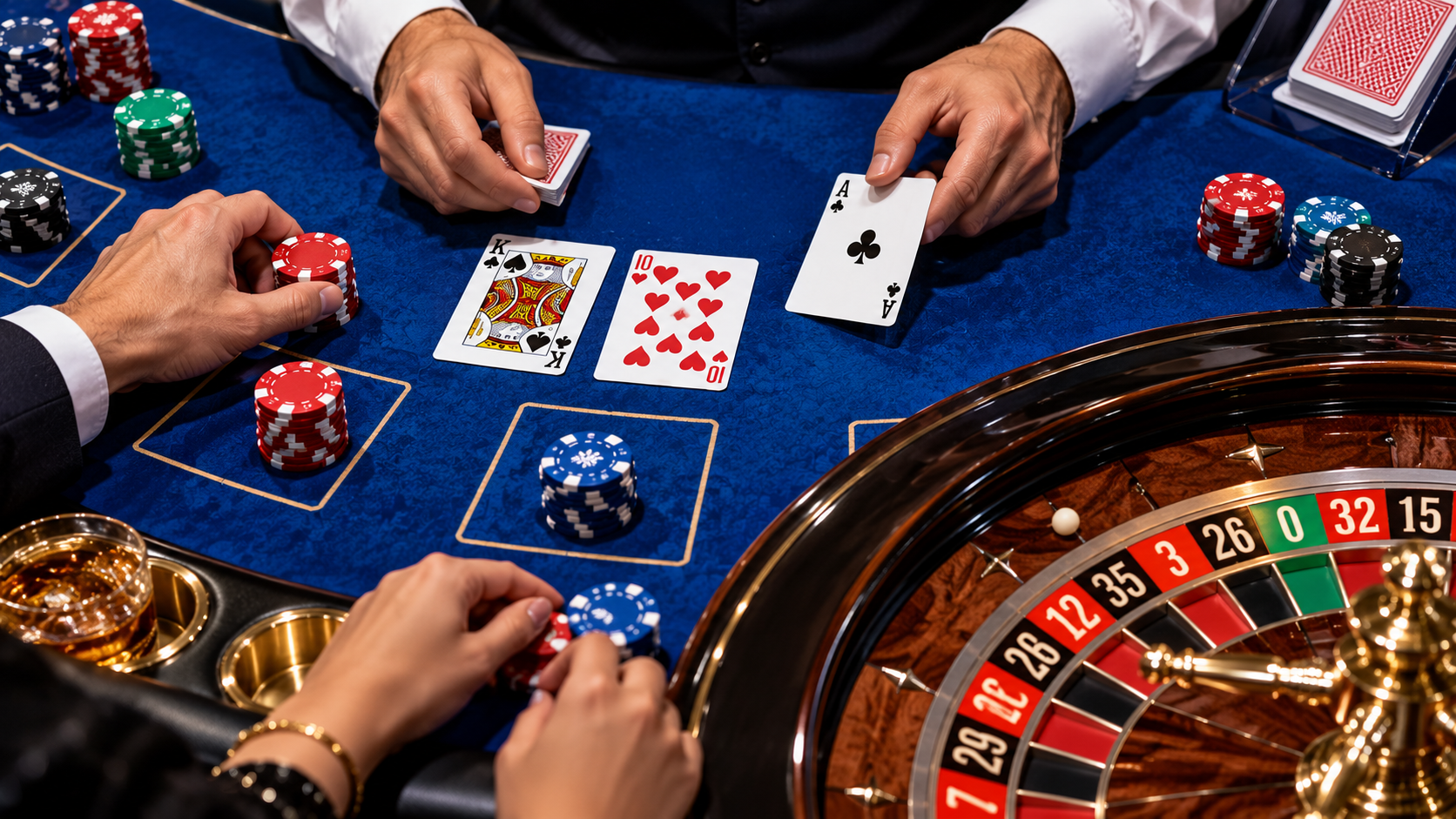
Return to the game collection →A table brings a different pace to a casino screen. Cards are laid out one at a time, a dealer’s hands move into view, and a roulette wheel holds attention as it turns. The action has a setting as well as a result: the green or blue surface, the arrangement of cards and chips, and the brief pause before the next reveal all give a table its character.
The ComeOn listing names live casino, Teen Patti, Andar Bahar and Rummy alongside slots. Those subjects bring several traditions into one conversation, from familiar Indian card games to live table presentations. The game cards on this site are references and the account panels are previews; real-money play is not connected.
Card games with a familiar setting
Teen Patti has a social quality that starts with its name: three cards and a shared table. Its familiar format brings attention to the cards themselves, the other people around the table and the changing mood of a round. In an illustrated or digital setting, those elements become part of the visual design. The space between seats, the way cards appear and the pace of each reveal all shape how the scene feels.
Andar Bahar offers a different kind of table image. Two named sides give the layout its simple visual structure, with cards appearing around a central reference card. The presentation can be spare or highly produced, yet the two sides remain a strong visual anchor. A reader can recognise the table at a glance even when the lighting, colours and surrounding studio change.
Rummy, also named in the source description, brings another card-game tradition to the collection of topics. Its appeal often lies in the arrangement of a hand and the changing relationships between cards. Rather than sharing the same visual rhythm as a single central table, it gives more attention to groups and sequences. These descriptions introduce game themes, not a claim that a particular Rummy title is currently offered here.
The live table as a stage
Live casino presentation puts the table itself at the centre. A studio, a dealer and a camera frame an event that is happening in view. The result can feel closer to watching a table than looking at a purely animated screen, though each production makes its own choices about lighting, camera angles and the amount of information around the picture.
Roulette is especially visual. A wheel, a ball and a numbered layout are recognisable even before a studio adds its own colour or set design. The circular movement creates a natural pause in the action: the eye follows the ball while the table remains in view. The wheel is both a practical part of the round and the image that gives roulette its familiar identity.
Blackjack offers a more compact scene. Cards, a dealer position and the table layout carry much of the visual story. The sequence develops through cards appearing on the surface, which gives the presentation a different rhythm from the movement of a wheel. A close camera view can emphasise the cards; a wider view can show more of the studio and the table around them.
One screen, several points of view
Table games invite designers to balance a number of details. The main image must be large enough to follow, while the names and information around it need to remain readable. On a phone, that balance becomes especially important. A simple composition can make the cards or wheel easier to see without losing the sense of being at a table.
Colour can also establish a mood. Dark backgrounds and bright table surfaces give the action a clear focus, while a warmer studio can make the set feel more like a social space. These choices do not change the identity of the games, but they do influence how a visitor experiences the page. A still image of cards and chips can introduce the theme; a live presentation adds movement, timing and a person at the table.
There is also a contrast between a familiar card table and a studio built for a live audience. The first can feel close and conversational, with attention on a small group of cards. The second may use a wider set, lighting and camera changes to give a wheel or dealer more space. Both draw on a table as the meeting point for the action, even when their visual styles are far apart.
From familiar cards to live action
The range named in the ComeOn source description is broad enough to show how varied table entertainment can be. Teen Patti and Andar Bahar draw attention to cards and their arrangement. Rummy suggests a different relationship between the cards in a hand. Live blackjack and roulette add a studio view, where the table, dealer and camera work together as part of the presentation.
That variety is reflected in the images used across this site: a hand holding cards, chips gathered on a table, and a wheel seen from above. Together they offer a visual tour of the subject rather than a single uniform look. Readers can explore the game section for the titles shown in the current reference collection and follow the themes that interest them.